Buy czechcasting.eu ?
We are moving the project
czechcasting.eu .
Are you interested in purchasing the domain
czechcasting.eu ?
domain@kv-gmbh.de · 0541-91531010
Buy czechcasting.eu ?
How can one model functions?
One can model functions by using mathematical equations or graphs to represent the relationship between the input and output of the function. This can involve using algebraic expressions to define the function, or plotting points on a graph to show the behavior of the function. Additionally, one can use technology such as graphing calculators or computer software to help visualize and analyze the function. By modeling functions, one can better understand their behavior and make predictions about their values. **
How much can I earn as an amateur erotic model?
As an amateur erotic model, your earnings can vary widely depending on factors such as your level of experience, the platform you use to sell your content, and the size of your audience. Some amateur erotic models may earn a few hundred dollars per month, while others with a larger following and more experience can earn thousands of dollars. It's important to consider the potential risks and legal implications of this type of work, and to ensure that you are comfortable with the level of exposure that comes with it. **


Similar search terms for Functions
Top-Angebote
Products related to Functions:
-
VEVOR 68oz Jar Professional Blender Stainless 3 Functions for Drinks Smoothies BlackAbout This Product Efficient & Delicate Blending: The smoothie blender has a maximum power of 2200W (Rated Power: 1400W) and a rotation speed of 2600RPM, operating strongly with 6 stainless steel blades (304 grade).65,87 $*Shipping: 0,00 $Secure redirect to the provider
-
Inspire Curations Men Waterproof LED Digital Sports Watch With Alarm & Fitness Functions redBuilt for action and designed for everyday wear, this mens digital sports watch keeps you on time and on track. Whether you're training, working, or heading outdoors, this waterproof sports watch for men delivers reliable performance with a bold LED...76,95 $*Shipping: 0,00 $Secure redirect to the provider
-
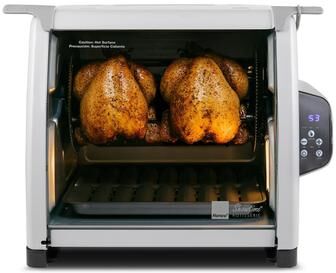
Ronco 6000 Platinum Series Rotisserie Oven, 3 Cooking Functions, Digital Display, Includes Rotisserie SpitRonco 6000 Platinum Series Rotisserie Oven, 3 Cooking Functions, Digital Display, Includes Rotisserie Spit and Multi-Purpose Basket Description: It’s Showtime with the Ronco 6000 Platinum Series Rotisserie Oven!224,46 $*Shipping: 0,00 $Secure redirect to the provider



-
How can one model with functions?
One can model with functions by using mathematical equations to represent real-world phenomena. This involves identifying the variables and parameters involved in the situation, and then using these to create a function that describes the relationship between them. This function can then be used to make predictions, analyze trends, and solve problems related to the modeled situation. By carefully choosing and manipulating the function, one can create a model that accurately represents the behavior of the system being studied. **
-
How can one model with quadratic functions?
One can model with quadratic functions by using the general form of a quadratic function, which is f(x) = ax^2 + bx + c. The coefficients a, b, and c can be adjusted to fit the specific situation being modeled. Additionally, one can use the vertex form of a quadratic function, which is f(x) = a(x-h)^2 + k, to easily identify the vertex of the parabola and make predictions about the function's behavior. By understanding the properties and characteristics of quadratic functions, one can effectively model real-world situations such as projectile motion, profit maximization, and optimization problems. **
-
How can one model linear and quadratic functions?
To model linear functions, one can use the equation y = mx + b, where m represents the slope and b represents the y-intercept. By plotting points on a graph and connecting them with a straight line, one can visualize the linear relationship between the variables. For quadratic functions, one can use the equation y = ax^2 + bx + c, where a represents the coefficient of the quadratic term, b represents the coefficient of the linear term, and c represents the constant term. By plotting points on a graph and observing the parabolic shape of the curve, one can visualize the quadratic relationship between the variables. In both cases, it is important to analyze the coefficients and the shape of the graph to understand how the function behaves and make predictions based on the model. **
-
How can one model with general sinusoidal functions?
One can model with general sinusoidal functions by using the form y = A sin(Bx + C) + D or y = A cos(Bx + C) + D, where A represents the amplitude, B represents the frequency, C represents the phase shift, and D represents the vertical shift. By adjusting these parameters, one can create a sinusoidal function that fits a given set of data or represents a particular phenomenon. Additionally, one can use trigonometric identities to manipulate and simplify the general sinusoidal functions to better fit the specific modeling needs. **
How can one model quadratic functions No. 4?
To model quadratic functions, one can use the general form of a quadratic function, which is f(x) = ax^2 + bx + c. The values of a, b, and c can be determined by analyzing the characteristics of the quadratic function, such as the vertex, x-intercepts, and y-intercept. Additionally, one can use the vertex form of a quadratic function, which is f(x) = a(x-h)^2 + k, where (h, k) represents the vertex of the parabola. By understanding the properties and characteristics of quadratic functions, one can effectively model and analyze their behavior. **
Which functions are not rational functions?
Functions that are not rational functions include trigonometric functions (such as sine, cosine, and tangent), exponential functions (such as \(e^x\)), logarithmic functions (such as \(\log(x)\)), and radical functions (such as \(\sqrt{x}\)). These functions involve operations like trigonometric ratios, exponentiation, logarithms, and roots, which cannot be expressed as a ratio of two polynomials. **
Top-Angebote
Products related to Functions:
-
Ivy Bronx Midea Rice Cooker with 9 Functions Black 4mlWith its excellent performance and thoughtful design, Midea rice cooker brings you and your family a dining experience that is both convenient and delicious. With a large capacity of 2L, it is ideally suited for small families of 1-3 people, combining practicality with space-saving convenience. Offering 9 cooking modes, it caters to various culinary needs beyond just cooking rice. Equipped with a built-in NTC temperature sensing probe, it provides precise temperature control and intelligently adjusts the heat, resulting in sweeter and more delicious rice. Rice can be cooked in just 30 minutes, while simultaneously preventing overflow during cooking rice or porridge. The 24-hour timer allows you to flexibly schedule cooking times according to your personal needs, and the long-lasting keep-warm function ensures that rice and dishes maintain their optimal taste, satisfying your dining needs at any time. Ivy Bronx62,99 £*Shipping: 0,00 £Secure redirect to the provider
-
Smeg 50's Retro 2-Slice Toaster with 6 Preset FunctionsAdd timeless Italian design and reliable performance to your countertop with the SMEG 2 Slice Toaster in Cream. Inspired by 1950s retro style, this SMEG toaster combines elegant curves with modern functionality.229,95 $*Shipping: 0,00 $Secure redirect to the provider
-
VEVOR 68oz Jar Professional Blender Stainless 3 Functions for Drinks Smoothies BlackAbout This Product Efficient & Delicate Blending: The smoothie blender has a maximum power of 2200W (Rated Power: 1400W) and a rotation speed of 2600RPM, operating strongly with 6 stainless steel blades (304 grade).65,87 $*Shipping: 0,00 $Secure redirect to the provider
-
Inspire Curations Men Waterproof LED Digital Sports Watch With Alarm & Fitness Functions redBuilt for action and designed for everyday wear, this mens digital sports watch keeps you on time and on track. Whether you're training, working, or heading outdoors, this waterproof sports watch for men delivers reliable performance with a bold LED...76,95 $*Shipping: 0,00 $Secure redirect to the provider
-
How can one model functions?
One can model functions by using mathematical equations or graphs to represent the relationship between the input and output of the function. This can involve using algebraic expressions to define the function, or plotting points on a graph to show the behavior of the function. Additionally, one can use technology such as graphing calculators or computer software to help visualize and analyze the function. By modeling functions, one can better understand their behavior and make predictions about their values. **
-
How much can I earn as an amateur erotic model?
As an amateur erotic model, your earnings can vary widely depending on factors such as your level of experience, the platform you use to sell your content, and the size of your audience. Some amateur erotic models may earn a few hundred dollars per month, while others with a larger following and more experience can earn thousands of dollars. It's important to consider the potential risks and legal implications of this type of work, and to ensure that you are comfortable with the level of exposure that comes with it. **
-
How can one model with functions?
One can model with functions by using mathematical equations to represent real-world phenomena. This involves identifying the variables and parameters involved in the situation, and then using these to create a function that describes the relationship between them. This function can then be used to make predictions, analyze trends, and solve problems related to the modeled situation. By carefully choosing and manipulating the function, one can create a model that accurately represents the behavior of the system being studied. **
-
How can one model with quadratic functions?
One can model with quadratic functions by using the general form of a quadratic function, which is f(x) = ax^2 + bx + c. The coefficients a, b, and c can be adjusted to fit the specific situation being modeled. Additionally, one can use the vertex form of a quadratic function, which is f(x) = a(x-h)^2 + k, to easily identify the vertex of the parabola and make predictions about the function's behavior. By understanding the properties and characteristics of quadratic functions, one can effectively model real-world situations such as projectile motion, profit maximization, and optimization problems. **
Similar search terms for Functions
-
Ronco 6000 Platinum Series Rotisserie Oven, 3 Cooking Functions, Digital Display, Includes Rotisserie SpitRonco 6000 Platinum Series Rotisserie Oven, 3 Cooking Functions, Digital Display, Includes Rotisserie Spit and Multi-Purpose Basket Description: It’s Showtime with the Ronco 6000 Platinum Series Rotisserie Oven!224,46 $*Shipping: 0,00 $Secure redirect to the provider
-
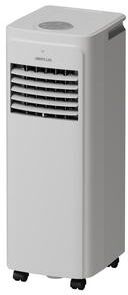
/ Portable Air Conditioner with Cooling & Heating Functions, Remote Control, Dehumidifier Mode for Home Use4-in-1 Multi-Function Design for Year-Round Comfort This portable air conditioner is designed to deliver powerful cooling, efficient heating, dehumidifying, and fan functions all in one unit.396,99 $*Shipping: 0,00 $Secure redirect to the provider
-
How can one model linear and quadratic functions?
To model linear functions, one can use the equation y = mx + b, where m represents the slope and b represents the y-intercept. By plotting points on a graph and connecting them with a straight line, one can visualize the linear relationship between the variables. For quadratic functions, one can use the equation y = ax^2 + bx + c, where a represents the coefficient of the quadratic term, b represents the coefficient of the linear term, and c represents the constant term. By plotting points on a graph and observing the parabolic shape of the curve, one can visualize the quadratic relationship between the variables. In both cases, it is important to analyze the coefficients and the shape of the graph to understand how the function behaves and make predictions based on the model. **
-
How can one model with general sinusoidal functions?
One can model with general sinusoidal functions by using the form y = A sin(Bx + C) + D or y = A cos(Bx + C) + D, where A represents the amplitude, B represents the frequency, C represents the phase shift, and D represents the vertical shift. By adjusting these parameters, one can create a sinusoidal function that fits a given set of data or represents a particular phenomenon. Additionally, one can use trigonometric identities to manipulate and simplify the general sinusoidal functions to better fit the specific modeling needs. **
-
How can one model quadratic functions No. 4?
To model quadratic functions, one can use the general form of a quadratic function, which is f(x) = ax^2 + bx + c. The values of a, b, and c can be determined by analyzing the characteristics of the quadratic function, such as the vertex, x-intercepts, and y-intercept. Additionally, one can use the vertex form of a quadratic function, which is f(x) = a(x-h)^2 + k, where (h, k) represents the vertex of the parabola. By understanding the properties and characteristics of quadratic functions, one can effectively model and analyze their behavior. **
-
Which functions are not rational functions?
Functions that are not rational functions include trigonometric functions (such as sine, cosine, and tangent), exponential functions (such as \(e^x\)), logarithmic functions (such as \(\log(x)\)), and radical functions (such as \(\sqrt{x}\)). These functions involve operations like trigonometric ratios, exponentiation, logarithms, and roots, which cannot be expressed as a ratio of two polynomials. **
* All prices are inclusive of VAT and, if applicable, plus shipping costs. The offer information is based on the details provided by the respective shop and is updated through automated processes. Real-time updates do not occur, so deviations can occur in individual cases. ** Note: Parts of this content were created by AI.